

A padel court can look like a straightforward addition to a site. In commercial reality, sports infrastructure is a long-term operating asset: it must attract players, withstand intensive use, support efficient maintenance and present the right standard from the first visit. For club owners, developers and facility operators, the difference between a court purchase and an infrastructure investment is found in the decisions made before production begins.
Padel’s growth has created a clear opportunity for venues that can deliver reliable court time in a premium environment. Yet demand alone does not protect a project. A poorly specified structure, restricted access, inadequate lighting or an unsuitable canopy can quickly limit utilisation and reduce the return expected from the site. The strongest developments treat every court as part of a complete commercial proposition.
Why sports infrastructure is a commercial decision
A successful padel venue is designed around more than the playing surface. It needs to work for players at peak times, staff during busy changeovers and owners assessing performance over many years. Court visibility, circulation routes, booking capacity, shelter, lighting and durability all influence the customer experience and the site’s earning potential.
This is particularly relevant for operators converting underused tennis courts, warehouse space or land within a leisure development. The available footprint may appear sufficient, but the project must also accommodate safe player access, spectator areas, reception flow, maintenance access and the equipment needed to operate the facility properly. A strong layout can create a destination. A compromised layout can leave valuable square metres underperforming.
For developers and hospitality groups, courts can also add value beyond direct booking income. They provide an active amenity that supports membership, dwell time, food and beverage spend, corporate events and residential or hotel appeal. The financial model will vary by location and audience, but the underlying requirement remains the same: the installation has to look credible, perform consistently and remain fit for purpose.
Start with the operating model, not the court catalogue
Court selection should follow the business plan. A premium city club aiming to build a distinctive padel identity may prioritise panoramic sightlines, refined finishes and a high-impact visual presence. A multi-court community facility may place greater weight on scalability, resilience and a specification that delivers quality across several courts. Neither approach is automatically better. The right choice depends on positioning, budget, expected utilisation and the standard the venue intends to maintain.
Before agreeing a specification, decision-makers should establish who will use the venue, when they will play and how the site will earn. Peak-time booking demand may justify additional courts sooner than expected. Coaching programmes require sufficient space around the court and clear viewing lines. Competitive events place higher demands on access, lighting, branding opportunities and spectator circulation. Covered courts may be vital in locations where weather disrupts outdoor play for much of the year.
It is also worth distinguishing between initial cost and whole-life value. A lower headline price can be attractive during project approval, but it may not account for structural strength, finish quality, corrosion protection, glass specification or installation expertise. Those factors affect appearance, maintenance requirements and confidence in the asset over time. Capital expenditure should be assessed against years of operation, not only against the opening budget.
Engineering quality protects the asset
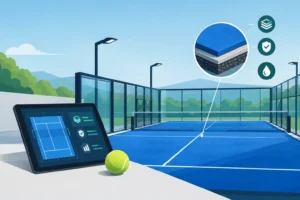
Padel is demanding on its structure. Repeated ball impact, player contact, wind exposure, temperature changes and high booking volumes place real pressure on every component. The steelwork, glass, mesh, fixings, turf system and foundations must operate as one engineered system rather than as a collection of individual parts.
Structural design deserves particular attention where projects are exposed to strong winds, coastal conditions or heavy rainfall. Local conditions can change the technical requirements substantially. A court that is appropriate for one site may need a different foundation approach, coating system or canopy solution at another. This is why project-specific assessment is more valuable than generic assumptions.
Premium finishing is not merely cosmetic. Consistent welding, carefully protected steel, precise glass alignment and clean detailing contribute to both perception and performance. For players, these details create trust in the venue. For operators, they help maintain a standard that supports premium pricing and protects the brand long after launch.
The choice between panoramic and pillar-based designs should be evaluated in this context. Panoramic courts maximise visibility and create the clean, professional appearance associated with leading padel environments. They can be particularly effective in flagship locations, showpiece clubs and sites where spectator experience matters. Pillar-style structures offer a more budget-conscious route while retaining the structural integrity and quality expected of a serious facility. The decision should reflect the role each court plays within the wider venue.
Covered padel courts change the revenue equation
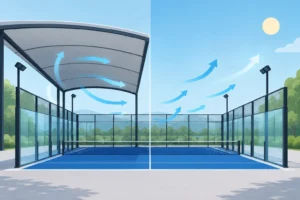
Weather is one of the most direct threats to court utilisation. Rain, wind, heat and low winter light can all reduce playable hours, discourage new participants and complicate programming. A canopy cover can turn an exposed outdoor court into a more dependable year-round asset, allowing operators to protect bookings and organise coaching, leagues and events with greater certainty.
However, not every cover is the same, and not every site needs the same answer. Height, drainage, airflow, lighting integration, side protection and structural loading must be considered together. A cover that improves weather protection but creates glare, poor ventilation or awkward access has not solved the operational problem. The aim is to preserve the open feel of padel while giving the venue greater control over its playing conditions.
For facilities in high-rainfall regions, the commercial case can be compelling because even a modest improvement in available playing hours can affect annual revenue. In warmer climates, shade and thermal comfort may become the stronger argument. Developers should also consider planning requirements, site boundaries and the visual relationship between the canopy and surrounding buildings before finalising the design.
Installation quality is part of the product
A court is only as good as its installation. Accurate ground preparation, correctly formed foundations, level tolerances and professional assembly determine whether the finished court performs as designed. Rushing this stage to meet an opening date can create problems that are expensive and disruptive to correct later.
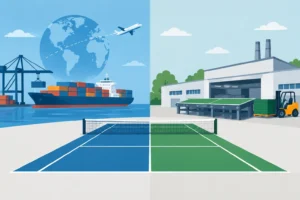
A capable infrastructure partner should coordinate the project from quotation through manufacturing and installation, with clear responsibility for the technical details. That includes confirming dimensions, reviewing site constraints, planning logistics and ensuring that the installation team understands the chosen model. International projects add further considerations around transport, local access, unloading arrangements and programme coordination.
For a club operator, this reduces risk at the point where multiple contractors often intersect. For an investor, it provides clearer accountability and a more dependable route from approved concept to operational facility. InCourts approaches padel developments as engineered projects, combining in-house manufacturing with court and canopy solutions designed for premium, high-use environments.
Build for the player experience and the maintenance plan
Players judge a venue quickly. They notice whether the glass is clean and well aligned, whether the turf feels consistent, whether lighting makes the ball easy to track and whether the court environment feels considered. These are not superficial details. They influence repeat bookings, referrals and the willingness of customers to accept premium pricing.
Maintenance should therefore be planned before the first booking is taken. A practical regime for cleaning glass, brushing and infilling turf where required, checking fixings, inspecting mesh and reviewing lighting helps preserve both safety and presentation. The frequency will depend on use, climate and surface conditions, but postponing routine care is rarely economical.
Operators should also retain records of inspections and repairs. This supports safer facility management, helps identify recurring issues and provides useful information when planning refurbishment or expansion. A court that remains visually strong and technically sound reinforces the value of the entire venue.
The strongest projects leave room to grow
Many padel sites begin with a small number of courts and expand once utilisation proves the market. That makes future planning valuable from the outset. Is there space for additional courts? Can reception, changing facilities and parking absorb higher traffic? Will power, drainage and access routes support a later canopy or lighting upgrade?
Not every project needs to be built at full scale on day one. Phased development can control capital exposure and test local demand. But the first phase should not block the second. Protecting expansion options in the original layout is usually far less costly than redesigning a successful but constrained site later.
The best sports infrastructure does not simply create somewhere to play. It gives an operator the confidence to sell court time, build a community and grow a venue around an asset designed to perform. Start with the commercial ambition, specify the engineering to match it and give the project the installation standard it deserves.


No comment yet, add your voice below!