

A premium padel court has to do more than look impressive on opening day. For a club owner, developer or leisure operator, the top features of premium courts determine whether the asset performs commercially through busy peak hours, changing weather and years of intensive use. The right specification supports safer play, lower disruption, stronger member perception and a venue that continues to command premium booking rates.
The difference is rarely one headline feature. It is the quality of the structure, glass, turf, lighting, fixings and installation working together as one engineered system. A court may appear similar at first glance, yet the detail behind its finish and performance can be very different.
Structural strength is the starting point
The steel structure is the court’s working foundation. It carries glass panels, mesh enclosure systems, lighting columns and, where required, canopy loads. A premium court should therefore be designed around the forces it will face in its intended location, not simply produced to a generic format.
High-quality steel profiles, accurate fabrication and appropriate corrosion protection matter particularly for outdoor projects. Coastal air, regular rain, frost cycles and high wind exposure all place greater demands on the structure. A well-engineered frame maintains alignment, reduces movement at connection points and preserves the clean geometry that makes premium padel courts visually distinctive.
Finishing is also more than cosmetic. Powder-coated steel in a carefully specified finish improves resistance to weathering and daily wear while giving the court a consistent, professional appearance. For commercial venues, this matters because the court becomes part of the club’s visual identity. It is often the first thing prospective members, hotel guests or investors see.
Panoramic visibility without compromising performance
Glass is central to the padel experience. It shapes ball rebound, spectator sightlines and the court’s visual impact. Premium courts use toughened glass panels specified for sporting use, installed with carefully engineered supports and high-quality fixings.
The most striking designs reduce visual obstruction around the rear and sides of the court. Panoramic and full panoramic formats create broader views across the playing area, making them especially effective for flagship clubs, premium hospitality venues and competition environments. They improve the experience for spectators and create stronger imagery for social content, events and membership marketing.
There is, however, a commercial decision behind every court format. Full panoramic designs are designed for maximum visual openness and a high-end presentation. Pilar-style courts retain excellent quality and playability while offering a more economical structural solution for projects where budget, rollout speed or court quantity is the greater priority. The correct choice depends on the site, target customer and the role each court plays in the wider business model.
Premium turf should support consistent ball response
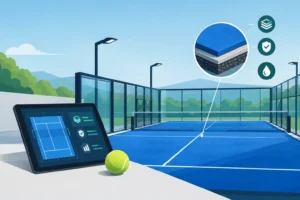
Artificial turf is where players feel quality immediately. The pile height, yarn construction, density and infill specification influence traction, player comfort and the pace of play. A low-cost surface may initially look acceptable but can flatten quickly, wear unevenly or create inconsistent bounce in high-traffic areas.
A premium padel turf system is selected to provide controlled ball behaviour and reliable grip while supporting player movement. It should also suit the operating conditions of the site. Outdoor courts require particular attention to drainage and weather resilience, while covered or indoor courts may allow different decisions around infill and maintenance routines.
Colour has a commercial role as well. Blue and green remain familiar choices, but the best decision should reflect the venue’s identity, lighting design and practical maintenance requirements. A court that photographs well can support marketing, but visibility of lines and ball tracking must remain the priority.
Lighting must serve both players and operations
Poor lighting is immediately noticeable, especially when a venue trades into the evening. Shadows across the playing area, glare when serving and dark corners near the glass all undermine the playing experience. They can also reduce the perceived standard of an otherwise excellent facility.
Premium LED lighting should provide even illumination across the court, with positioning and mounting designed around the structure. The objective is not simply high output. It is controlled light distribution that allows players to follow a fast ball comfortably without excessive glare.
For operators, efficient lighting has a direct effect on running costs. LED systems can reduce energy consumption and maintenance demands compared with older alternatives, but the specification should still account for local operating hours, surrounding neighbours and any planning conditions. Lighting needs for a private members’ club may differ from those of a municipal facility or a destination venue hosting competitive events.
Engineering for the site is a premium feature
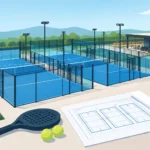
The strongest court design cannot compensate for inadequate groundwork. Base preparation, drainage, levels and anchoring must be assessed before production and installation begin. This is where a serious infrastructure partner adds value: by treating the court as a construction project rather than a product delivery.
A proper site review identifies access restrictions, ground conditions, utility requirements, wind exposure and water management considerations. It also confirms whether the facility needs a standard external court, an enclosed installation or a canopy-covered solution. Overlooking these factors can create delays, avoidable remedial work and higher lifetime costs.
Drainage deserves particular focus in the UK. Standing water around the court perimeter affects access, appearance and long-term ground performance. The court base and surrounding surface should direct water effectively, protecting both the player environment and the investment beneath it.
Canopy integration expands trading potential
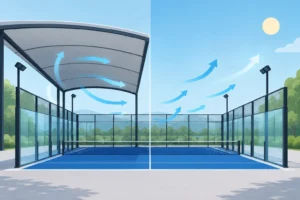
Weather protection can transform the revenue profile of a padel venue. A well-designed canopy cover reduces disruption from rain and helps maintain a more dependable booking schedule across the year. For operators in locations with variable weather, that reliability can be the difference between an attractive concept and a consistently performing business.
A canopy must be engineered as part of the overall installation. Clearance, structural interfaces, wind considerations, rainwater management and lighting integration all require attention. An improvised cover may protect the playing area in the short term, but it can compromise aesthetics, airflow and access if it has not been designed around the court.
The strongest projects treat the canopy and court as a coherent premium environment. This approach creates a more polished facility, supports member confidence and makes the venue more suitable for coaching programmes, leagues and corporate bookings that need certainty around playing conditions.
Details and finishing separate premium from ordinary
The top features of premium courts are often visible in the small details: clean welds, precise alignment, protected connections, uniform coating and carefully finished access points. These elements signal manufacturing discipline and influence how the court ages.
Gate design is one example. Players need safe, practical access that does not interrupt the enclosure’s visual flow. Mesh panels should be tensioned and installed accurately, avoiding sharp edges, rattling components or poor joins. Glass hardware must be reliable and correctly positioned to maintain safe clearance and consistent rebound.
These details also affect maintenance. Courts are commercial assets, so operators need components that can be inspected, cleaned and serviced efficiently. A premium manufacturer should be able to provide clear technical information, replacement support and an installation process that gives the operator confidence from handover onwards.
Installation quality protects the investment
Even the best materials can underperform if installation is rushed or poorly coordinated. Experienced installation teams work to defined tolerances, sequence construction correctly and resolve site-specific issues without compromising the finished court.
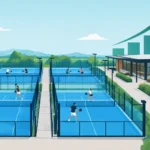
For multi-court developments, programme management becomes especially important. Delivery schedules, access for equipment, base readiness and commissioning must be coordinated so the venue can open on time. Delays in one part of the project can affect staffing, launch campaigns, membership sales and revenue forecasts.
inCourts approaches this process through engineered court models, in-house manufacturing knowledge and professional installation delivery. For buyers, the value is not simply receiving a court. It is having accountability across the stages that determine quality: specification, fabrication, logistics, installation and final presentation.
Choose features around the business case
A premium specification should be ambitious, but it should also be commercially intelligent. A flagship full panoramic court may be the right centrepiece for a high-visibility club, luxury development or tournament-led venue. A high-quality Pilar model may be the better route for an operator focused on building more playable capacity within a defined capital budget.
The same principle applies to canopies, lighting packages and turf choices. The most valuable feature is the one that supports the venue’s operating model, local climate, target player and expected utilisation. Premium does not mean adding every available option. It means investing in the structural and operational qualities that will protect performance long after the opening photographs have been taken.
Before committing to a court specification, assess the site, the expected player volume and the standard your customers will pay for. That conversation will lead to a court built not just to launch strongly, but to keep earning its place in the facility for years to come.

No comment yet, add your voice below!