

A padel enclosure is not a secondary purchase around the playing area. It is the structure that carries the glass, retains the ball, defines the court’s visual standard and absorbs years of impact, weather and daily use. For club owners, developers and facility operators, selecting the best materials for padel enclosures is therefore a long-term asset decision, not simply a specification exercise.
The right material combination protects availability, reduces maintenance exposure and supports the premium experience players expect. The wrong one may look acceptable at handover, but can quickly reveal itself through corrosion, movement, poor visibility or costly component replacement.
Best Materials for Padel Enclosures: The Core Specification
A high-quality padel enclosure is a system rather than a single material. Its performance depends on the relationship between the primary steel structure, glass panels, mesh fencing, fixings, coatings and foundations. Each component must be engineered for the site, court model and anticipated level of play.
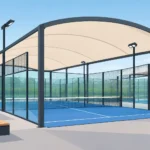
For most commercial projects, the strongest starting point is a galvanised structural steel frame, tempered safety glass, welded steel mesh and a high-quality powder-coated finish. This combination provides strength, controlled ball rebound, visual clarity and dependable resistance to outdoor exposure.
However, there is no universal specification for every development. A covered club in a mild climate has different priorities from a coastal outdoor facility, a hospitality venue or a high-volume public installation. Material selection should reflect local wind loads, drainage, salt exposure, maintenance access, planning requirements and the commercial positioning of the venue.
Galvanised Steel: The Structural Foundation
Steel remains the preferred material for padel court structures because it delivers the stiffness and load-bearing capacity required for an enclosed, glass-led playing environment. The frame must support heavy glass panels, resist lateral movement and maintain alignment over a long service life.
Hot-dip galvanised steel is particularly valuable for outdoor courts. The galvanising process applies a protective zinc coating that helps prevent corrosion, including in less visible areas such as joints, internal faces and connection points. This matters because corrosion rarely begins where it is easiest to inspect. It often develops around fixings, welds or areas where water can collect.
The quality of the steelwork is as important as the coating. Properly designed posts, cross-members and base plates create a stable enclosure with controlled deflection under wind and playing loads. Thin or lightly engineered sections may reduce the initial budget, but they can compromise glass alignment and lead to rattling, movement or accelerated wear.
For coastal, humid or high-rainfall locations, galvanised steel should be treated as a baseline rather than an upgrade. In these environments, the wider detailing is equally important: water must drain away from the base, connections should avoid moisture traps, and damaged finishes must be repaired promptly.
Powder Coating for Protection and Presentation
A polyester powder-coated finish adds another layer of protection while giving the court its finished appearance. Black and dark anthracite remain popular because they create a clean visual frame around the glass and integrate well with professional-style court design. Bespoke colours can also support a club identity or wider architectural scheme.
The finish should not be judged only by colour consistency. Surface preparation, coating thickness and curing quality determine how well the finish withstands UV exposure, abrasion and regular cleaning. A premium powder coat over galvanised steel offers significantly better long-term resilience than a basic painted surface over untreated steel.
There is a practical trade-off. Dark finishes can show dust and hard-water marks more readily, particularly around exposed glass and steel intersections. That does not make them a poor choice, but it does make a planned cleaning regime part of the asset strategy.
Tempered Safety Glass: Performance and Visibility
Glass is central to the padel playing experience. It allows the ball to remain in play after rebounds and gives spectators a clear view of the action. For premium facilities, it also creates the open, high-impact visual identity associated with leading padel venues.
Tempered safety glass is the established choice for enclosure walls. It is designed to withstand the repeated impacts associated with padel and, if it does break, fragments into small pieces rather than dangerous large shards. Panel thickness must be specified in relation to the court design, fixing system and expected usage, with 10 mm and 12 mm solutions commonly considered for commercial courts.
Thicker glass can provide greater confidence in demanding installations, but thickness alone is not the full answer. Glass performance relies on accurate manufacturing, polished edges, correctly positioned holes and a fixing system that avoids concentrated stress. Poor installation can undermine even high-specification glass.
For operators choosing between a Pilar court and a panoramic or full panoramic design, glass also affects the visual result. Traditional pillar-supported systems provide strong, recognisable structure and can be a commercially sensible solution. Panoramic systems reduce visible upright elements around the rear glass, creating clearer sightlines and a more premium spectator experience. The engineering demand rises as the structure becomes more visually minimal, which is why material quality and connection design become even more critical.
Welded Mesh: Ball Retention Without Compromising Play
The mesh sections complete the enclosure, particularly around the upper perimeter and side areas. They need to contain the ball, withstand direct impacts and remain rigid enough to prevent vibration or deformation.
Welded steel mesh is generally the preferred option for professional and commercial projects. Compared with lighter fencing products, a properly specified welded mesh panel maintains its shape, presents a cleaner finish and better supports the high-use environment of a busy club. Mesh aperture, wire diameter and panel reinforcement should be selected as part of the overall structural design rather than in isolation.
Galvanising and powder coating are just as relevant here as they are for the main frame. Exposed cut edges, weld points and low-level sections are common areas for corrosion to develop if the protective treatment is insufficient. Facilities near the sea should pay particular attention to mesh protection, as salt-laden air can affect surfaces long before visible deterioration appears.
Fixings, Gaskets and Connections Matter More Than They Seem
A premium enclosure can be weakened by low-grade small components. Bolts, anchors, clamps, gaskets and glass supports may represent a modest portion of the project cost, but they determine how the structure behaves in service.
High-quality galvanised or stainless-steel fixings help resist corrosion. Stainless steel can be especially appropriate in aggressive environments, although material compatibility must be considered carefully to avoid galvanic corrosion where different metals meet. The correct washers, isolators and gaskets protect glass edges, accommodate controlled movement and reduce unwanted vibration.
Connection design should also support inspection and maintenance. A court is a revenue-generating facility, so operators need components that can be checked, tightened or replaced without disruptive intervention. This is one reason to work with a manufacturer that controls engineering, production and installation rather than treating the enclosure as an assembly of unrelated purchased parts.
Foundations and Drainage Support the Enclosure
The best materials for padel enclosures will not perform as intended on an inadequate base. Reinforced concrete foundations anchor the structure and must be designed for local ground conditions, wind loading and the selected court model. Accurate levelling is essential, particularly where glass panels and panoramic rear structures demand precise alignment.
Drainage deserves equal attention. Standing water around base plates and posts accelerates corrosion, affects surrounding finishes and can create operational issues after heavy rain. Outdoor projects should include a clear drainage strategy from the outset, not as a late-stage amendment once the court is installed.
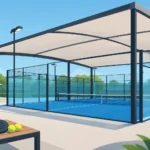
For canopy-covered installations, the relationship between the court enclosure and cover structure must be coordinated early. Rainwater management, roof loading, wind effects, clear heights and maintenance access all influence the final design. Treating the canopy as a separate addition can create unnecessary compromises.
Matching Materials to the Business Case
A club launching its first two courts may prioritise dependable, cost-controlled Pilar structures with galvanised steel, tempered glass and durable mesh. A flagship urban venue or premium hospitality project may place greater value on full panoramic visibility, refined detailing and a court that performs as a visual centrepiece.
Both approaches can be commercially sound. The key is not to confuse a lower initial price with better value. The total cost of ownership includes cleaning, corrosion prevention, component availability, downtime, player perception and the ability to retain a premium positioning over time.
At inCourts, material selection is approached as part of the complete court solution: structural performance, visual finish, installation conditions and the commercial ambition of the venue must work together. That is how a court becomes a reliable infrastructure asset rather than a short-term installation.
Before approving a final specification, ask how each material will perform after five years of daily play, winter weather and routine maintenance. The answer will usually lead to a better court, a stronger customer experience and a more defensible investment.

No comment yet, add your voice below!